
Is Digital Boss Academy a Scam? Here’s What I Actually Found
Direct Answer in Sentence One
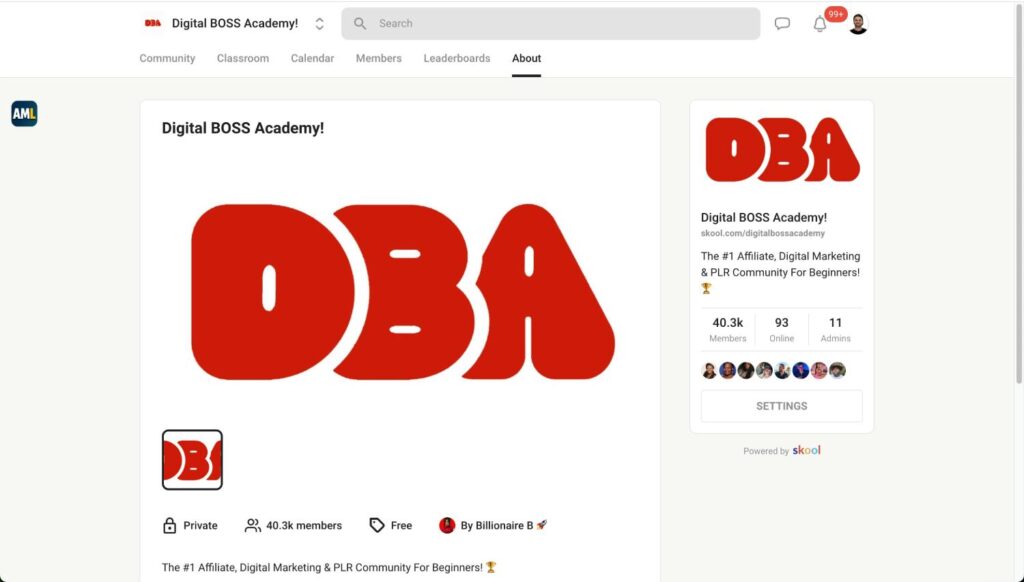
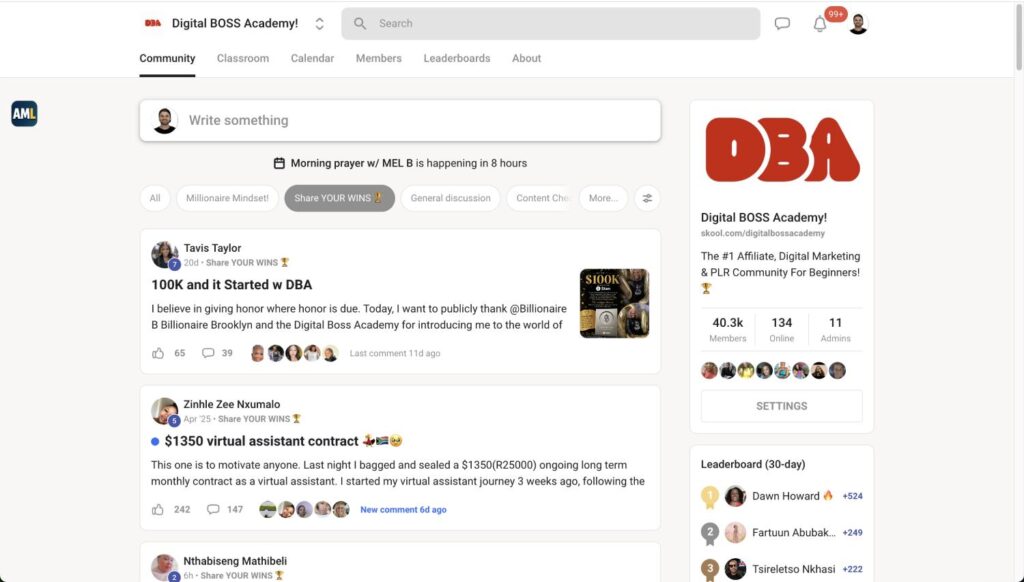
No, Digital Boss Academy is not a scam. It’s a real Skool community with 40,300 members, a 30 module curriculum, live weekly calls, and a working affiliate payment system.
The one thing that trips people up isn’t fraud, it’s the no refund policy, and a curriculum that covers a lot more ground than “digital marketing.” I’ll walk through both below, along with the actual checks I ran before writing this.
Why People Ask This
Search “is Digital Boss Academy a scam” and you’ll find a mix of old criticism, some dating back to when the program first started drawing attention on TikTok and Instagram in 2024.
A handful of reviewers who never actually joined called it a scam based on the price alone or the founder’s lifestyle-forward marketing, a new house, big single-day earnings posts. That’s an opinion formed from the outside, not evidence from actually being inside the program.
Separately, DBA switched its entire business model in 2026, moving from Master Resell Rights on Volumes 1 and 2 to an 85% affiliate structure across all three volumes. When a program’s terms change, people naturally get suspicious, even when the change makes the program more secure, not less. I cover that switch in full on the recent switch away from Master Resell Rights.
Outdated third-party listings on Etsy and elsewhere still advertise the old MRR terms, which adds to the confusion when a prospective buyer stumbles onto conflicting information mid-research.
There’s also the comparison effect. DBA sits in the same general space as programs like Digital Wealth Academy, which has drawn heavier and more persistent scam criticism. Some of that skepticism spills over onto any program with a similar structure, regardless of whether it’s actually earned.
What the Checks Actually Show
A few concrete things worth knowing before you write this off as a scam or take it on faith:
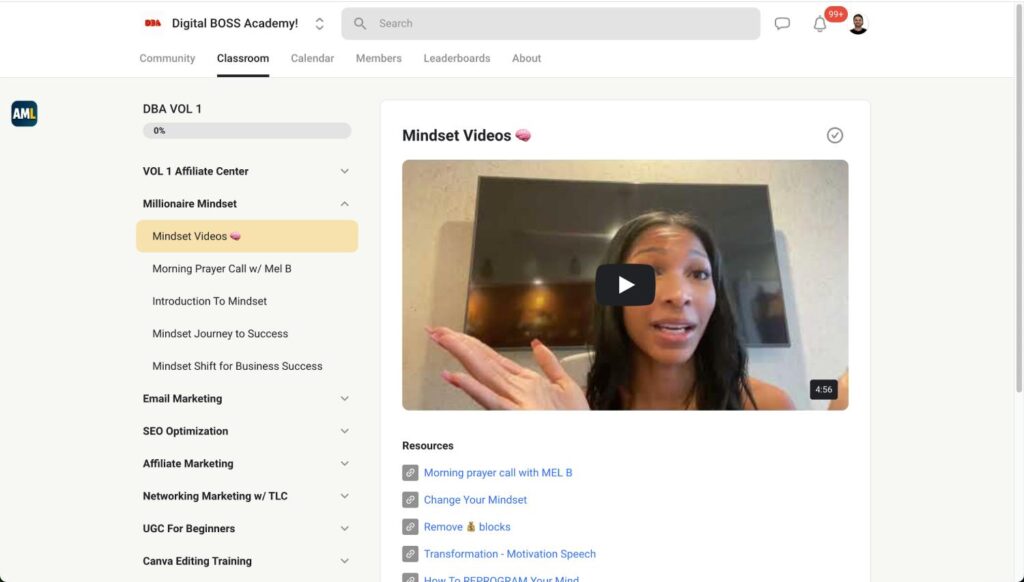
- The community is active and real. Across 4,275 captured posts in the “Share YOUR WINS” community feed, 108,489 reactions and 73,717 comments show genuine engagement, not a ghost town or a wall of bots posting the same script.
- Direct mentions of the word “scam” inside that same feed are rare, just 8 out of 4,275 posts, and most of those are unrelated context, brands, other platforms, and general marketing talk. The one post that does address it directly describes a heckler calling DBA a scam during a livestream and getting brushed off, not a wave of buyer complaints demanding money back.
- The program teaches an entire FTC Compliance module, taught by a guest instructor, Jessica Leigh, covering misrepresentation, unsubstantiated income claims, and how the FTC enforces advertising law. That’s not something a program trying to hide something typically includes voluntarily as part of its own curriculum.
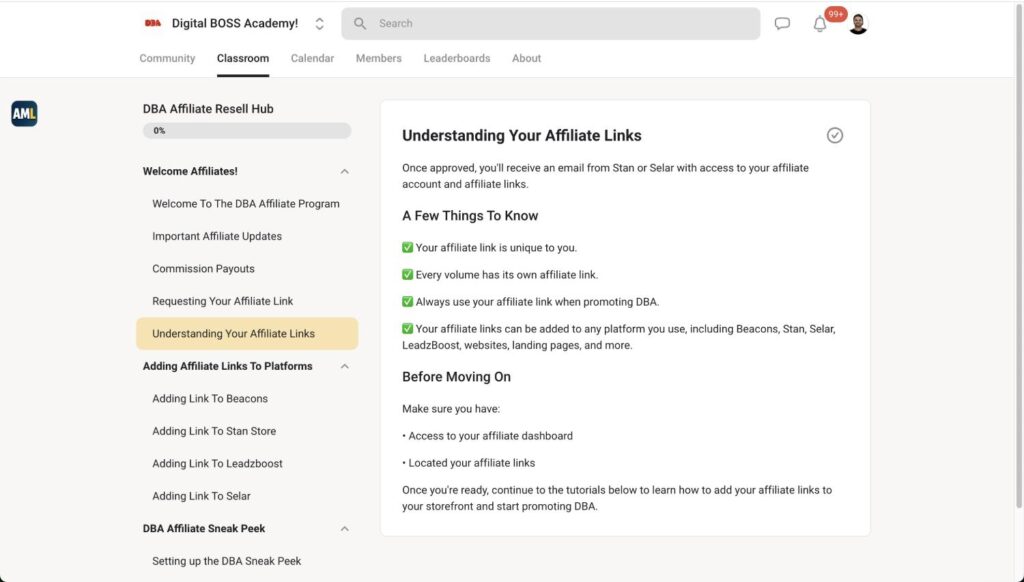
- Commission payouts are real and documented: 85% on every volume, paid out 7 to 30 days after a confirmed sale, through Stan Store, Selar, or other approved platforms, with the exact math shown inside the classroom itself.
- ScamAdviser rates the official domain “likely safe,” and no FTC action or lawsuit against DBA or its creator turned up in public search as of this writing.
None of that means every claim inside the community is accurate. Some member posts include big dollar figures, one reports $127,000 in three months, another a first full month at $20,000, and those are self-reported and unverified.
Treat them as anecdotes, not guarantees, the same way you’d treat any testimonial anywhere online.
The One Real Criticism: No Refunds
This is the legitimate concern, not “is it a scam.” DBA’s own terms are direct: “Digital Products are instant downloads. Which means NO REFUNDS… all sales are final and non-refundable.” There’s no trial period.
Once you pay, you own it, good or bad. That’s a real risk to weigh, and it’s the single most defensible criticism of the program, far more substantial than the scam label that gets thrown around in search results.
I break this down fully on the no refund policy, including how to protect yourself before you pay rather than after.
The Curriculum Scope Problem
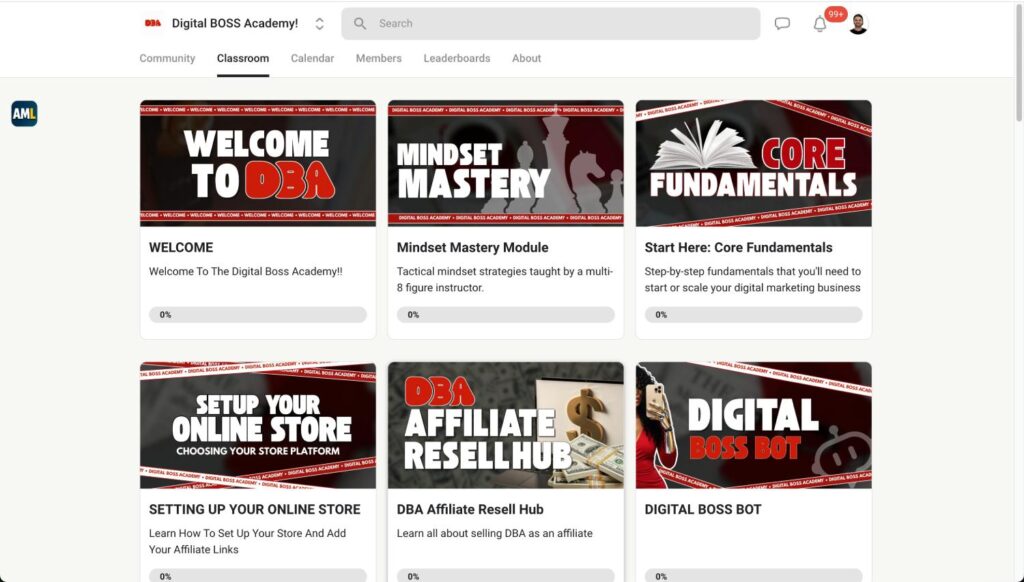
The other honest criticism worth naming: DBA’s 30 modules cover a lot more than digital marketing.
Alongside the three volumes, you’ll find a 15 module tax prep business bootcamp, a Stocks & Crypto module, a SaaS module, a beauty business module on wig making, and a 2 lesson Sports Betting module promising “data-driven, low-risk strategies.”
That’s not evidence of fraud, but it is scattered, and it’s fair to wonder whether a beginner should be learning wig sewing and sports betting inside a course marketed as digital marketing training.
Similarly, the PLR Vault advertises “over 100 PLR products” but a direct count turns up 26 templates, and the Content Vault isn’t done-for-you content at all, it’s links to other creators’ accounts for inspiration only.
Overselling what’s inside a module is a real weakness, even if it doesn’t make the underlying program fraudulent.
One thing that isn’t a red flag: buying through this specific page also gets you the free Creator Accelerator: DBA Edition bonus, my own $297 value bundle covering a done-for-you funnel, an email series, and SEO training, on top of whatever DBA itself includes.
Frequently Asked Questions
If you want the full picture before deciding, start with my full Digital Boss Academy review, then look at Digital Boss Academy pricing to see exactly what each tier costs.
[[button: Check Current Digital Boss Academy Pricing -> #get-started-now]]